Hva gjør blødning?
Feb 17, 2022
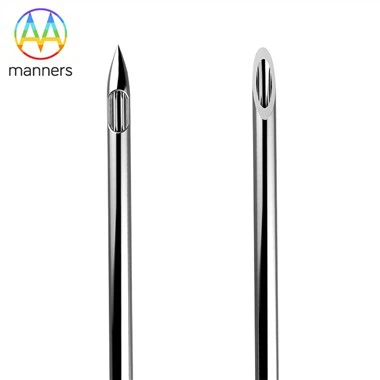
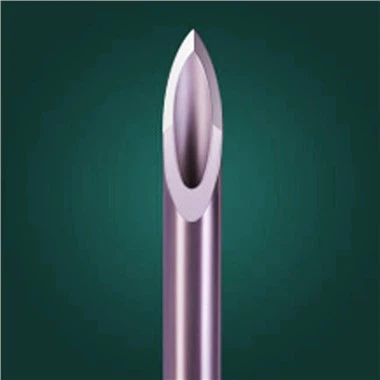
The bloodletting therapy of traditional Chinese medicine is also called "acupuncture bloodletting therapy". It is a method of piercing or cutting the superficial veins of specific acupoints in the human body with a three-edged needle, a thick needle or a small sharp knife, releasing a small amount of blood, and expelling the internal heat toxin, so as to achieve a method of curing diseases. It has the functions of reducing swelling and relieving pain, dispelling wind and relieving itching, opening orifices and releasing heat, antiemetic and antidiarrheal, and clearing and activating meridians. The origin of acupuncture and bloodletting can be traced back to the ancient Stone Age. At that time, people found in the labor practice that using a sharp stone, a Bianstone, to bleed the affected part, can cure certain diseases. With the development of science, the tools of Bianstone needling have produced metal needles. Later, according to the needs of medical practice, "sharp needles" specially used for bloodletting treatment appeared. The earliest written records of bloodletting therapy in traditional Chinese medicine can be found in the "Huangdi Neijing", such as "those who pierce the collaterals, pierce the blood of the small collaterals"; And clearly put forward that pricking collaterals and bloodletting can treat diseases such as madness, headache, violent diarrhea, heat asthma, epistaxis and so on. According to legend, Bian Que bled blood at Baihui acupoint to cure the "corpse" of the crown prince; Hua Tuo treated Cao Cao's "head rheumatism" with acupuncture and bleeding. During the Tang and Song Dynasties, acupuncture and bloodletting became one of the major methods of traditional Chinese medicine. "New Book of Tang" records: The Tang Dynasty imperial doctor's head bloodletting method cured Tang Gaozong's "dizziness and inability to see". In the Song Dynasty, this method was incorporated into the acupuncture song "Yulong Fu". During the Jin and Yuan Dynasties, Zhang Zihe's medical cases of acupuncture and moxibustion in "Confucianism and Family" are almost all acupuncture and bloodletting, and he believes that acupuncture and bloodletting are the fastest way to attack evil. From the Ming and Qing Dynasties, bloodletting was very popular. The development of needles is also rapid, and the three-edged needle has been divided into two types: thick and thin, which are more suitable for clinical application. Yang Jizhou's "Acupuncture and Moxibustion Dacheng" records the medical records of acupuncture and bloodletting in more detail; Ye Tianshi used acupuncture and bloodletting to cure laryngeal diseases; Zhao Xuemin and Wu Shangxian collected many bloodletting treatments and compiled them into "Cuanya Waibian" and "Li Ying Pianwen" middle. In modern times, bloodletting therapy is still widely used, especially in the folk. Its value is gradually recognized and accepted by people. The operation methods of bloodletting therapy in Chinese medicine are divided into: point needling (also known as rapid needling); picking needling (mostly used for bloodletting in the chest, back and back of the ear); slow needling (mostly used for bloodletting of superficial veins in the elbow and popliteal fossa); peripheral needling (also known as scattered thorns. For skin diseases and other lesions around the puncture bleeding) and so on. Strict reminders in nursing: Weak constitution, pregnant women and those with poor coagulation mechanism should not use this method. It is particularly emphasized that the manipulation should be steady, accurate, and light, not too violent, and the bloodletting should not be too much. It can be seen that the application of bloodletting therapy in traditional Chinese medicine in nursing is strictly regulated! (1) Cooling due to high fever: Dazhui and Shixuan points for bloodletting; (2) Sore throat: Shaoshang point for bloodletting; (3) Headache: Temple point for bloodletting; (4) Heat stroke: Shixuan point for bloodletting; (5) Whole body itching: bloodletting by prickling the vein behind the ear; (6) scattered needling bloodletting around the lesion and corresponding parts for neurodermatitis, erysipelas, carbuncle and furuncle; (7) acute gastroenteritis: slow needling bloodletting at Quze and Weizhong points . Listed here, it is only to illustrate that "bloodletting" in traditional Chinese medicine is particular. Please do not pretend to know and imitate without authorization! Special reminder: Once the needle fainting phenomenon occurs during the operation of the bloodletting therapy of traditional Chinese medicine, the patient should immediately lie down, drink hot water, and pay attention to the complexion, pulse, and blood pressure. For those with severe symptoms, be sure to consult a doctor! In particular, non-professionals should not blindly apply "bloodletting therapy".
Hvis du har spørsmål, vennligst kontakt oss. Vårt firma kan produsere ulike tilpassede nåler, medisinske nåler, punkteringsnåler, hypodermiske nåler, biopsinåler, vaksinenåler, injeksjonsnåler, sprøytenåler, veterinærnåler, blyantspissnåler, eggoppsamlingsnåler, spinalnåler, etc. Hvis du trenger tilpasset nålprodukter, vennligst kontakt oss. Vi ser frem til din henvendelse! Kvaliteten på produktene produsert i vår fabrikk vil garantert tilfredsstille deg!
Kontakt oss hvis du trenger: zhang@sz-manners.com